


Toddler Rash After Eating: What It Means
- Gary Stiefel

- 1 day ago
- 6 min read
When a rash appears minutes after a meal, most parents think the same thing - was that an allergy? A toddler rash after eating can be caused by food allergy, but it can also be linked to eczema, contact irritation, heat, viral illness or simple coincidence. The difficulty is that the timing feels suspicious, even when the rash itself is not caused by the food.
What matters most is the pattern. The appearance of the rash, how quickly it comes on, whether it happens every time with the same food, and whether there are other symptoms alongside it all help to show whether this needs urgent attention, routine review or careful observation.
When a toddler rash after eating might be an allergy
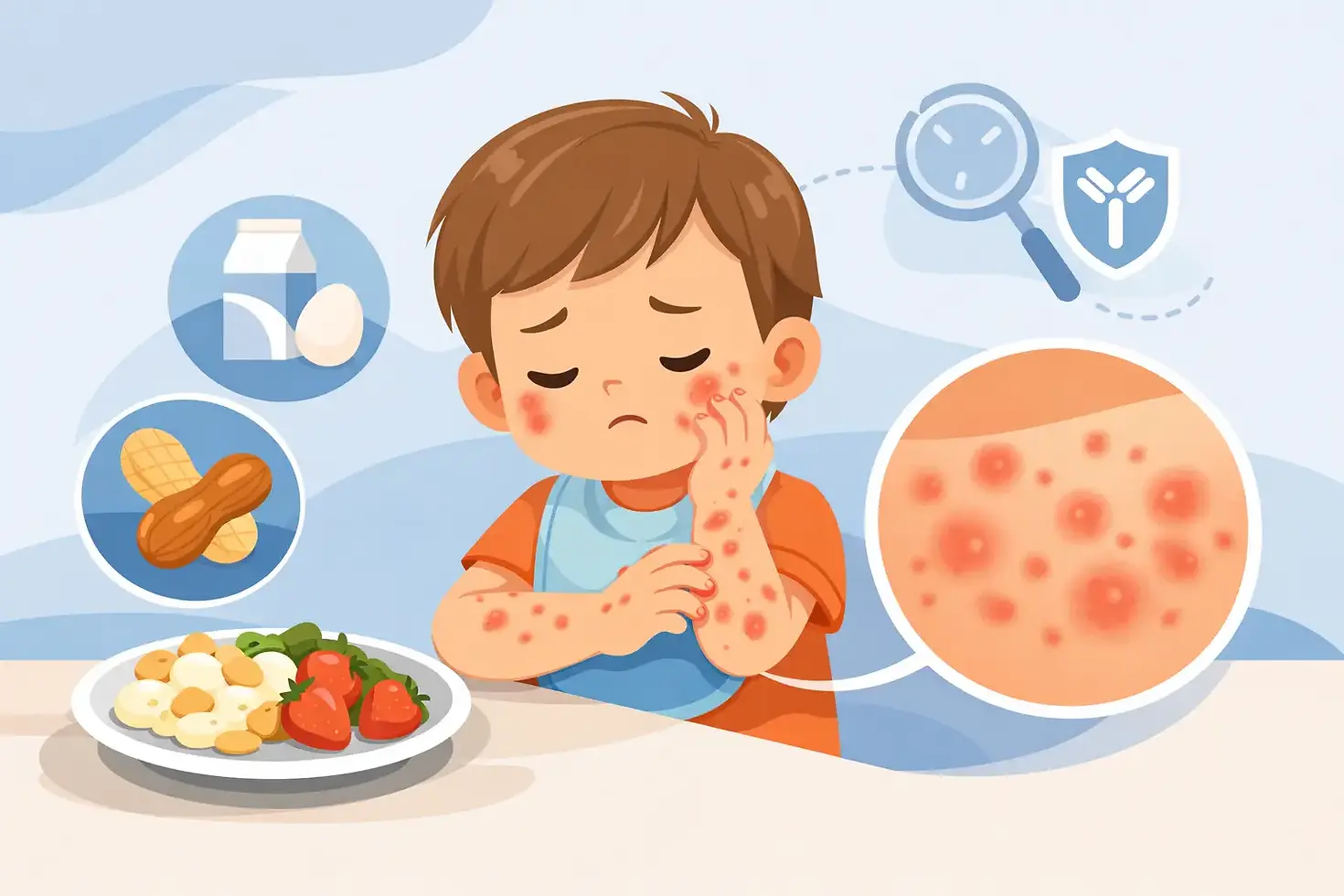
A true allergic rash often comes on quickly. In many children, hives appear within minutes to up to two hours after eating the trigger food. Hives, also called urticaria, are raised, itchy swellings that can move around the body. They may look like nettle stings, with blotchy patches that change shape and location.
If your toddler develops hives repeatedly after eating a particular food such as egg, cow’s milk, peanut or another common allergen, that pattern deserves specialist assessment. The same is true if the rash comes with swelling of the lips, vomiting, coughing, a hoarse cry, wheeze, floppiness or unusual drowsiness. Those combinations are more concerning than a rash alone.
Not every food-related allergic rash looks dramatic. Some children develop redness around the mouth where food has touched the skin. That may be irritation rather than a true allergy, especially with acidic foods such as tomato, citrus fruits or yoghurt. Even so, if the same food also causes hives elsewhere, swelling or other symptoms after swallowing, allergy becomes much more likely.
Common causes of rash after eating in toddlers
The reason this symptom is so confusing is that several different conditions can look similar at first glance.
Food allergy
This is the cause most parents worry about, and sometimes rightly so. Immediate food allergy often causes hives, flushing, itch, swelling or worsening eczema soon after eating. In some cases, gastrointestinal or breathing symptoms appear as well. The key clue is reproducibility - the same reaction with the same food on more than one occasion.
Contact skin irritation
Toddlers are messy eaters. Food on the cheeks, chin and neck can irritate sensitive skin, especially if a child already has eczema. Strawberries, tomatoes, citrus fruits and sauces often cause a local red patch where the food has touched. This can look alarming but is not always an allergic reaction.
Eczema flare
Children with eczema may look worse after meals for reasons that are not straightforward. Heat, dribbling, rubbing the face with food-covered hands and general skin sensitivity can all trigger redness. Some parents assume every flare is food-driven, but that is often not the case. Avoiding multiple foods without a clear diagnosis can make feeding more difficult and may not help the skin.
Viral rashes and coincidence
Toddlers pick up frequent viral infections, and many viral rashes appear suddenly. If a rash happens after lunch, the meal may be blamed when the timing is actually accidental. This is one reason the full clinical history matters more than one photograph taken in a stressful moment.
What the rash looks like matters
A moving, itchy, raised rash points more towards hives. Dry, rough, inflamed skin suggests eczema. A flat red patch limited to the mouth area may fit contact irritation. Tiny widespread spots with fever or cold symptoms may have nothing to do with food at all.
Parents often do exactly the right thing by taking photographs. If the rash fades before a medical review, those pictures can be very helpful. Try to note the food eaten, the time symptoms began, how long they lasted, and whether there was vomiting, swelling, coughing or a change in behaviour.
When to seek urgent help
A rash after eating needs urgent medical attention if it is accompanied by breathing difficulty, persistent coughing, wheezing, throat symptoms, marked lip or tongue swelling, repeated vomiting, collapse, floppiness or sudden extreme sleepiness. These may be signs of a severe allergic reaction.
Even if symptoms settle, any child with suspected anaphylaxis should be reviewed promptly by the appropriate emergency service. If you have been prescribed adrenaline auto-injectors, follow your child’s personalised emergency plan.
When to arrange a specialist assessment
Not every toddler with a rash after food needs extensive testing, but some certainly do. Specialist review is sensible when reactions happen more than once with the same food, when hives appear quickly after eating, when there is swelling or vomiting, when eczema is severe and food triggers are suspected, or when parents are already restricting the diet because they are frightened of another reaction.
This is where a paediatric allergy assessment can be particularly valuable. In a specialist clinic such as Children’s Allergy Cambridge, the aim is not simply to order tests. The first job is to decide whether the history sounds allergic in the first place, because tests only make sense when interpreted in the context of the child’s symptoms.
How allergy testing fits in
Skin prick testing and specific IgE blood tests
These tests can help identify sensitisation to suspected foods, but they are not yes-or-no answers on their own. A positive result does not automatically mean a child will react when eating that food. Equally, the wrong test panel can create confusion and unnecessary anxiety.
That is why targeted testing is far more useful than broad screening. The choice of tests should be guided by the history, the timing of the reaction and the foods actually involved.
Why expert interpretation matters
Parents are often told a child is “allergic” on the basis of a mildly positive result, only to find later that the story does not fit. Others are reassured too quickly when the symptoms were in fact strongly suggestive of allergy. Good paediatric allergy care is about putting the pieces together properly - history, examination, testing and practical next steps.
In some cases, an oral food challenge may be needed to clarify whether a child can safely eat a food. This must be planned carefully and in the right setting.
What to do at home while you are waiting for review
If you suspect a food trigger, do not keep re-testing it casually at home. Equally, do not remove a long list of foods from your toddler’s diet without proper advice. Over-restriction can make mealtimes stressful and may affect nutrition.
Instead, keep a clear record. Write down suspected foods, timings, the exact rash, and any other symptoms. Take photographs if you can. Continue regular eczema treatment if your child has eczema, because poorly controlled skin can make reactions around the mouth seem more dramatic.
If the reaction was immediate or involved hives, swelling, vomiting or breathing symptoms, avoid that specific food until specialist advice is available. If the rash was mild and localised, the safest next step still depends on the wider history rather than guesswork.
Toddler rash after eating and eczema - a common source of confusion
Many toddlers with eczema are suspected of having food allergy, but only a proportion actually do. It is understandable why families make the connection. Skin that is already inflamed reacts more easily, and food smeared on the face can cause visible redness within minutes.
The challenge is separating a surface skin reaction from a genuine immune-mediated allergy. If a child can eat a food regularly without hives, swelling, vomiting or clear worsening after ingestion, the food may not be the problem. On the other hand, eczema and food allergy can coexist, especially in younger children with more significant eczema.
This is one of those situations where “it depends” is the honest answer. The details make all the difference.
Reassurance matters, but so does precision
Parents are often caught between two unhelpful extremes. One is being told not to worry when the pattern really does suggest allergy. The other is being advised to avoid multiple foods “just in case”, which can create fear, confusion and nutritional problems.
A careful paediatric allergy review should leave you with something more useful than a label. You should understand what is likely, what is unlikely, whether testing is needed, what your child should avoid, what they can continue to eat, and what to do if symptoms happen again at home, nursery or with other carers.
If your toddler develops a rash after eating, trust your observation, but do not feel you have to solve it alone from internet pictures and ingredient labels. A calm, structured assessment usually brings much more clarity than parents expect, and that clarity is what helps families move forward with confidence.


Comments