


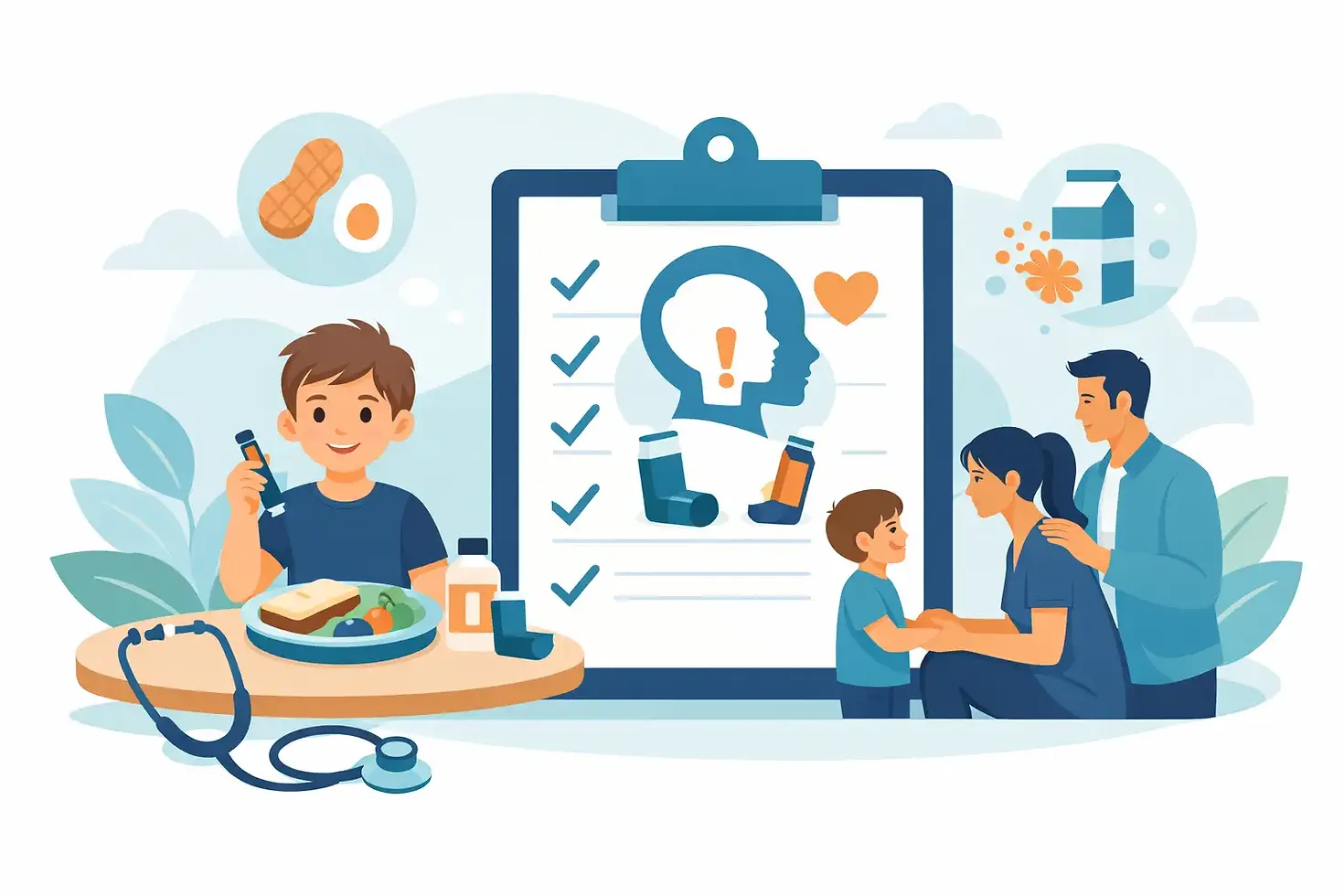
Example Child Allergy Management Plan

A good example child allergy management plan is not just a form to file away in a drawer. It should help parents, schools and nurseries make clear decisions when a child is well, when symptoms first appear, and when urgent treatment is needed. For families living with food allergy, allergic rhinitis, eczema, hives or more complex allergic disease, that clarity can make everyday life feel much safer.
Parents often arrive with a mixture of questions and frustration. They may already have test results, a list of foods to avoid, or repeated episodes of rash, swelling or wheeze, but no practical plan that works at home and outside it. That is where a child-specific management plan matters. It should reflect the child’s age, confirmed triggers, pattern of reactions, other conditions such as asthma, and the realities of school meals, parties, sports clubs and sleepovers.
What an example child allergy management plan should include
The best plans are specific. General advice such as “avoid nuts” or “give antihistamine if needed” sounds straightforward, but it leaves too much room for guesswork. In practice, staff and relatives need to know exactly what the child is allergic to, what symptoms are expected, what medicines are prescribed, and when to escalate.
A well-written plan usually starts with the child’s details, diagnosis and confirmed or strongly suspected triggers. That may include foods such as peanut, milk or egg, environmental allergens such as pollen or animals, or a history of urticaria or eczema flares linked to certain exposures. If testing has been performed, the results should be interpreted in context rather than copied across without explanation. A positive test alone does not always equal a clinically relevant allergy, and over-restriction can create unnecessary anxiety and dietary burden.
The plan should then describe the child’s usual reaction pattern. This is important because not every allergy behaves in the same way. One child may develop localised hives after skin contact, while another may have rapid multi-system symptoms after ingestion. A teenager with hay fever and asthma may need a very different plan from a toddler with immediate egg allergy.
Medicines and instructions must be precise
One of the most common problems with a generic allergy plan is vagueness around medicines. An effective plan sets out the name of each medicine, the dose, when it should be given, and who can administer it. That may include regular treatments, such as a non-sedating antihistamine for allergic rhinitis, as well as emergency medicines for acute reactions.
If an adrenaline auto-injector has been prescribed, the plan should state clearly where it is kept, when it should be used, whether a second device is available, and when an ambulance should be called. This needs plain language. In an emergency, staff do not have time to interpret medical jargon or work out whether symptoms are “serious enough”. The wording should help them act early and appropriately.
For some children, inhalers will also be part of the plan. This is especially relevant where food allergy and asthma exist together, because poorly controlled asthma can increase risk during an allergic reaction. An allergy plan that ignores asthma is often incomplete.
An example child allergy management plan for school or nursery
A school or nursery version should translate medical advice into daily routines. It is not enough to say that all staff should be “aware”. The plan needs to identify who has been informed, who has been trained, and what practical steps are in place to reduce risk.
That usually includes arrangements around meals and snacks, handwashing, supervision of younger children, storage of medicines, and what happens on trips or activity days. For a nursery child, there may need to be specific guidance about messy play, shared food tables or milk alternatives. For older children, the discussion often shifts towards independence, confidence and safe participation rather than constant restriction.
There is also a balance to strike. A plan should reduce risk without excluding a child from normal school life. Blanket bans can sound reassuring, but they are not always effective and can sometimes create a false sense of security. In many settings, better staff training, careful communication and a clear emergency response are more valuable than simplistic rules.
Why tailored plans matter more than downloaded templates
Many parents search online for an example child allergy management plan because they want something concrete to work from. That makes sense. A template can be useful as a starting point, especially if it prompts the right questions. But it should not replace individual clinical assessment.
Two children with “nut allergy” may need very different advice. One may have had mild symptoms only after eating a larger quantity, while another has reacted to trace exposure and also has significant asthma. The wording around risk, avoidance and emergency treatment should not be identical. The same applies to milk, egg, sesame, kiwi, insect sting allergy and non-food allergic conditions.
This is particularly important where the diagnosis is still uncertain. Symptoms such as eczema flares, intermittent hives, abdominal pain or nasal blockage do not always point neatly to one cause. If a plan is built on assumptions rather than careful paediatric allergy assessment, families may end up avoiding the wrong triggers or missing a more relevant diagnosis.
How plans change with age and stage
An infant’s plan is usually parent-led. It may focus on formula choice, weaning, recognition of immediate reactions, eczema treatment and who to contact if symptoms change. For a primary school child, the emphasis often widens to include school meals, birthday parties, grandparents and medicine access.
Teenagers need something different again. At that stage, risk often shifts from accidental exposure by others to independent decision-making. A management plan for an adolescent should address carrying medication consistently, reading labels, eating out, travelling with friends and avoiding the temptation to minimise symptoms. If the plan still reads as though it is written for a Reception classroom, it will not fit real life.
Children with multiple allergic conditions also need joined-up advice. A child with eczema, food allergy and hay fever may have separate treatments for skin, nose and acute reactions, but families should not be left trying to combine them alone. The plan should explain how these conditions interact and which symptoms matter most in each setting.
When to review an allergy management plan
An allergy plan should never be treated as permanent. Children change, and so do allergic conditions. Some food allergies resolve over time. Weight changes may affect medicine doses. New symptoms can appear, and schools or nurseries may change.
As a rule, plans should be reviewed after any significant reaction, after a change in medication, when a child moves setting, or when new test results become available. A routine review is also sensible even when things seem stable. Families often cope bravely with day-to-day allergy, but practical problems emerge over time - uncertainty about packed lunches, confusion among carers, expired auto-injectors, or a child becoming more anxious about food. Those issues deserve proper attention rather than being dismissed as minor.
At specialist clinics such as Children’s Allergy Cambridge, management plans are usually part of a broader assessment rather than an isolated document. That means the diagnosis, test interpretation, treatment advice and emergency planning can all be aligned. For parents, that joined-up approach is often what turns a worrying list of symptoms into a clear path forward.
What parents can do before an appointment
If you are trying to put together a plan or check whether the current one is still suitable, it helps to bring detail. Keep a record of suspected triggers, timing of symptoms, photographs of rashes or swelling if available, current medicines, and any previous emergency treatment. If school or nursery staff have noticed patterns, their observations can be useful as well.
It also helps to note what is hardest in daily life. Sometimes the biggest issue is not diagnosis but implementation - perhaps mealtimes at nursery feel unsafe, eczema treatment is not working, or relatives are unclear about what counts as a serious reaction. A good allergy management plan should answer those practical questions, not just describe the condition.
Parents do not need a perfect document from the start. They need a safe, medically sound and usable one. The right plan should leave you feeling less alone, more prepared and clearer about what to do when it matters most.


Comments