


A Food Allergy Guide for Parents of Children

A child’s first suspected reaction to food can be frightening, particularly when the symptoms are unclear or appear hours later. This food allergy guide explains how food allergy is assessed, what families can do while waiting for answers, and why a carefully tailored plan is safer than broad dietary restriction.
What is a food allergy?
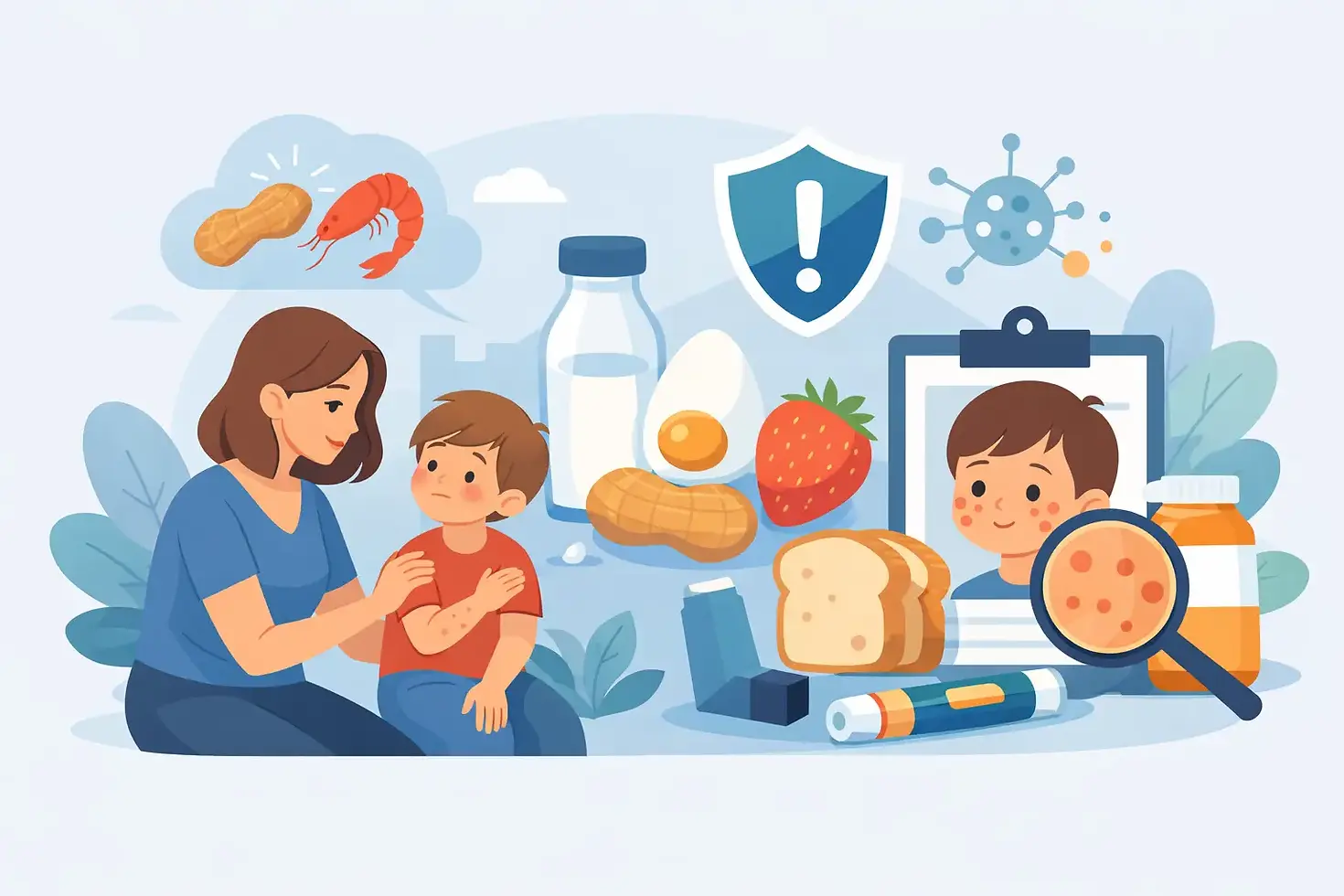
A food allergy occurs when the immune system reacts to a food protein that is normally harmless. Reactions can affect the skin, gut, breathing or circulation, and may happen within minutes or take longer to develop, depending on the type of allergy involved.
The foods most often responsible in children are milk, egg, peanut, tree nuts, sesame, wheat, soya, fish and shellfish. However, a reaction after eating one of these foods does not automatically confirm an allergy. Viral illnesses, eczema flares, reflux, lactose intolerance and non-allergic hives can all be mistaken for food allergy.
This distinction matters. Avoiding foods unnecessarily can make family meals more stressful, affect nutrition and, in some cases, make it harder to establish whether a child can safely eat the food. Equally, continuing to give a food after a convincing allergic reaction may carry a risk. Specialist assessment helps families find the right balance.
Recognising symptoms after eating
Immediate allergic reactions usually begin within minutes and up to two hours after eating. Common symptoms include itchy raised rash or hives, swelling of the lips, face or eyes, vomiting, cough, wheeze, throat discomfort or a sudden change in behaviour in a young child.
A more serious reaction, known as anaphylaxis, may involve breathing difficulty, persistent cough, wheeze, a hoarse voice, swelling of the tongue or throat, marked drowsiness, faintness or floppiness. If a child has symptoms suggesting anaphylaxis, use their prescribed adrenaline auto-injector without delay if one has been provided, call 999 and follow their emergency plan.
Not every reaction is immediate. Some children, especially babies with eczema, may have delayed worsening of eczema or gastrointestinal symptoms associated with particular foods. These presentations need a different and more detailed approach. A delayed rash alone, days after a food has been eaten, is less likely to represent an immediate IgE-mediated food allergy.
Keep a clear record, but do not rely on photos alone
If symptoms occur, write down the food eaten, the amount, the timing of symptoms, other foods in the meal, any medicines given and how long recovery took. Photographs of rashes or swelling can be useful, especially when symptoms have resolved before an appointment.
Context is also valuable. Was the child unwell? Had they exercised, taken ibuprofen, or eaten the food before without a problem? A specialist will consider the full history rather than interpreting a test result or image in isolation.
When should a child be assessed?
An assessment is particularly appropriate after an immediate reaction to food, repeated symptoms with the same food, unexplained hives, or eczema that remains difficult to control despite appropriate skin treatment. It can also help where a child has already avoided several foods, has unclear test results, or where parents are unsure whether an adrenaline auto-injector is needed.
Babies and young children deserve especially careful assessment because feeding is central to growth, development and family life. Milk and egg reactions may change over time, while peanut and tree nut allergy can be more persistent. The likely outlook depends on the individual child, the food involved, the reaction history and the allergy test results.
How food allergy is diagnosed
There is no single test that can diagnose every food allergy. Diagnosis begins with a detailed clinical history: exactly what was eaten, how quickly symptoms appeared, the pattern of reactions, the child’s eczema or asthma history, and whether they have tolerated the food at other times.
Skin prick testing and specific IgE blood testing can then be used to look for sensitisation to particular foods. Sensitisation means the immune system recognises a food protein. It does not always mean that eating the food will cause symptoms. This is one of the most common reasons families receive confusing advice after tests.
For example, a positive peanut test in a child who eats peanut regularly without symptoms is not, by itself, proof of peanut allergy. Conversely, a child with a convincing immediate reaction may need careful management even if an initial test is not strongly positive. Results must be interpreted alongside the clinical history by a clinician experienced in paediatric allergy.
When is an oral food challenge needed?
When the history and test results do not give a clear answer, a supervised oral food challenge may be the most reliable way to establish whether a child is allergic or has outgrown an allergy. During the challenge, measured amounts of the food are given in a clinical setting with trained staff and appropriate emergency treatment available.
A challenge is not suitable for every child at every stage. The decision depends on the type and severity of previous reactions, asthma control, test results and the expected benefit of obtaining a firm answer. For many families, a successful challenge can safely reintroduce a food and remove an unnecessary restriction.
A practical food allergy guide for daily life
Once an allergy is confirmed, the aim is not simply to avoid a food. Families need a plan that makes ordinary life safer and more manageable.
At home, read ingredient labels every time, including on products bought before, as recipes can change. Learn the different names a food may appear under, particularly for milk, egg and nuts. Cross-contact matters too: a food may be transferred by shared knives, chopping boards, hands or serving utensils. The level of precaution should be proportionate to the child’s allergy and discussed as part of their individual plan.
For nursery and school, provide clear written information about the confirmed allergens, usual symptoms, medicines and what to do in an emergency. Staff should know where any prescribed medication is kept and who is trained to use it. A plan should also cover parties, cookery lessons, school trips and changes in routine, rather than assuming the classroom is the only setting that needs consideration.
Eating out requires preparation, but it should not mean avoiding restaurants altogether. Tell staff about the allergy clearly, ask how the dish is prepared and do not rely on a menu symbol alone. Busy kitchens and buffet-style settings can present additional cross-contact risks. Where there is uncertainty, choosing a simpler alternative or eating elsewhere is often the sensible decision.
Medicines and emergency preparedness
Antihistamines can help with some mild allergic symptoms, such as hives, but they do not treat anaphylaxis. Children at risk of more serious reactions may be prescribed adrenaline auto-injectors. Parents, carers and older children should be trained in when and how to use them, and devices should be checked regularly for expiry dates.
Asthma should also be well controlled. Poorly controlled asthma can increase the risk from an allergic reaction, particularly where breathing symptoms occur. Families should ensure that the child’s allergy and asthma plans work together.
It is understandable to feel anxious after a reaction. Confidence usually grows when everyone involved knows the plan, has practised it and understands which symptoms require urgent action. Repeatedly restricting extra foods “just in case” may feel protective, but it is best avoided unless advised after assessment.
Supporting nutrition and confidence
Removing milk, egg, wheat or several foods can affect calcium, protein, energy intake and the variety of a child’s diet. This is particularly relevant for babies, fussy eaters, teenagers and children with multiple allergies. Dietetic support may be needed to ensure substitutes are nutritionally appropriate and that growth remains on track.
Children also need an age-appropriate understanding of their allergy. A young child can learn not to swap snacks; an older child can practise reading labels, speaking to restaurant staff and carrying their medication. The goal is gradual independence with sensible support, not fear around food.
If your child has had a suspected food reaction, a calm, specialist-led assessment can replace uncertainty with a clear plan for meals, nursery, school and the moments when you cannot be beside them.


Comments